



2025/12/18
A new study reveals the essential role of galectin-9 in immune system activation
A new study published in PNAS uncovers the essential role of galectin-9 (gal9) in orchestrating how dendritic cells activate T cells, revealing a previously unknown mechanism that could inspire next-generation cancer immunotherapies.
What if the immune system’s ability to detect and attack tumors depended on a single molecular organizer inside dendritic cells? With this question in mind, a multidisciplinary research team has demonstrated that gal9 is crucial for forming stable and functional immunological synapses, the contact points where dendritic cells present antigens to T cells and trigger adaptive immunity.
The study shows that gal9 interacts with the intracellular domains of HLA-DR, a major histocompatibility complex class II molecule. This interaction enables the precise recruitment and mobility of HLA-DR toward the dendritic cell–T cell interface, a process required for efficient antigen presentation and full activation of CD4+ T cells.
When gal9 is absent, dendritic cells fail to establish robust contacts with T cells, leading to weaker immune responses. In vivo, this impairment results in significantly reduced T cell–mediated tumor control, highlighting the protein’s potential as a target to enhance antitumor immunity.
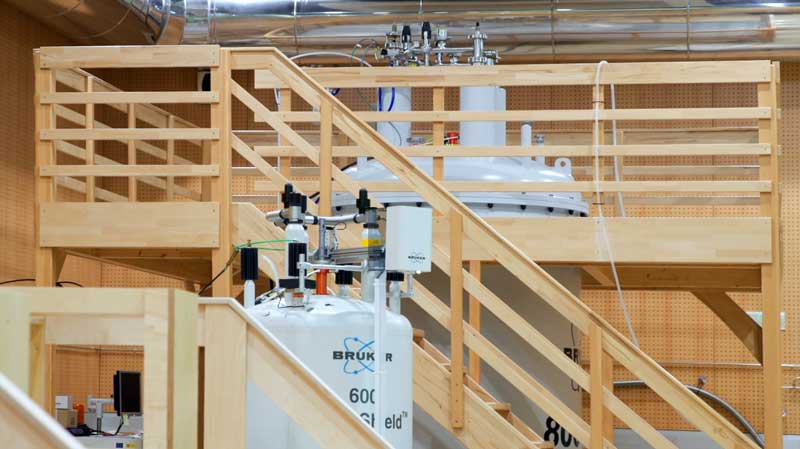
To investigate how gal9 recognizes and organizes HLA-DR, the team used NMR spectroscopy, which allowed them to identify changes in specific gal9 amino acids upon binding to HLA-DR peptides and map their interactions. This approach was complemented with coimmunoprecipitation, mass spectrometry and live cell microscopy.
The project exemplifies how collaboration drives immunological discovery. The research involved researchers from the Chemical Glycobiology Lab at CIC bioGUNE, member of BRTA, who contributed with their expertise in the applications of NMR to the study of galectin interactions related to glycan-mediated immune regulation. The study also received support from multiple international funding bodies, including the Dutch Cancer Society (KWF), the Cancer Research Institute (CRI), the Dutch Research Council (NWO), the European Research Council (ERC), and the AvL Foundation. Research activities at the Netherlands Cancer Institute were additionally supported by the Dutch Ministry of Health, Welfare and Sport.
“This work represents an important advance in our understanding of the molecular mechanisms of immune activation, unveiling one of the key players operating in dendritic cells, which is gal9” explain Ikerbasque researchers Dr. Ana Ardá and Prof. Jesús Jiménez-Barbero, associate principal investigator and scientific director at CIC bioGUNE, respectively. “Galectins are a family of human proteins that participate in a strikingly large number of biological processes, many of them related to pathological conditions, and understanding their role in each of these processes is essential to enable specific interventions”.
Over the coming years, these insights are expected to guide the development of therapeutic strategies aimed at reinforcing immune synapse formation, improving dendritic cell function, and enhancing the efficacy of cancer immunotherapies.
Beyond its mechanistic relevance, this research reinforces the importance of basic immunology in shaping clinical innovation and highlights how molecular discoveries can translate into improved patient-centered treatments.
Reference: Andrea Rodgers-Furones, Thijs Brands, Guusje van Gameren, Mirane Florencio-Zabaleta, Mayukha Bathinic, Sandra Delgado, Zacharias Wijfjes, Kristina Fedorova, René Classens, Lona Kroese, Martijn Verdoes, Guido van Mierlo, Jesús Jiménez-Barbero, Rik G. H. Lindeboom, Ana Ardá, Annemiek B. van Spriel, and Laia Querol Cano. Galectin-9 binding to HLA-DR in dendritic cells controls immune synapse formation and T cell proliferation. Proc. Natl. Acad. Sci. U.S.A. (PNAS). DOI: 10.1073/pnas.2501381122.
About CIC bioGUNE
The Centre for Cooperative Research in Biosciences (CIC bioGUNE), member of the Basque Research & Technology Alliance (BRTA), located in the Bizkaia Technology Park, is a biomedical research organisation conducting cutting-edge research at the interface between structural, molecular and cell biology, with a particular focus on generating knowledge on the molecular bases of disease, for use in the development of new diagnostic methods and advanced therapies.
About Ikerbasque
Ikerbasque —Basque Foundation for Science— is the result of an initiative of the Department of Education of the Basque Government that aims to reinforce the commitment to scientific research by attracting, recovering and consolidating excellent researchers from all over the world. Currently, it is a consolidated organization that has 290 researchers/s, who develop their work in all fields of knowledge.
About BRTA
BRTA is an alliance of 4 collaborative research centres (CIC bioGUNE, CIC nanoGUNE, CIC biomaGUNE y CIC energiGUNE) and 13 technology centres (Azterlan, Azti, Ceit, Cidetec, Gaiker, Ideko, Ikerlan, Leartiker, Lortek, Neiker, Tecnalia, Tekniker y Vicomtech) with the main objective of developing advanced technological solutions for the Basque corporate fabric.
With the support of the Basque Government, the SPRI Group and the Provincial Councils of the three territories, the alliance seeks to promote collaboration between the research centres, strengthen the conditions to generate and transfer knowledge to companies, contributing to their competitiveness and outspreading the Basque scientific-technological capacity abroad.
BRTA has a workforce of 3,500 professionals, executes 22 % of the Basque Country's R&D investment, registers an annual turnover of more than 300 million euros and generates 100 European and international patents per year.
See a large version of the first picture